Driver Trainer. Coach. Educator.
Creator of the Evidence-Led Behaviour Change Method™: Activity-based learning that replaces instruction with insight.
Fiona's work has evolved considerably beyond conventional driving instruction. Over more than 20 years, she has moved from teaching learners to pass tests toward understanding the behaviour, thinking, and decisions that sit behind how people actually drive.
Her career has been shaped by curiosity: a desire to understand not just what drivers do, but why, and to help instructors do the same.

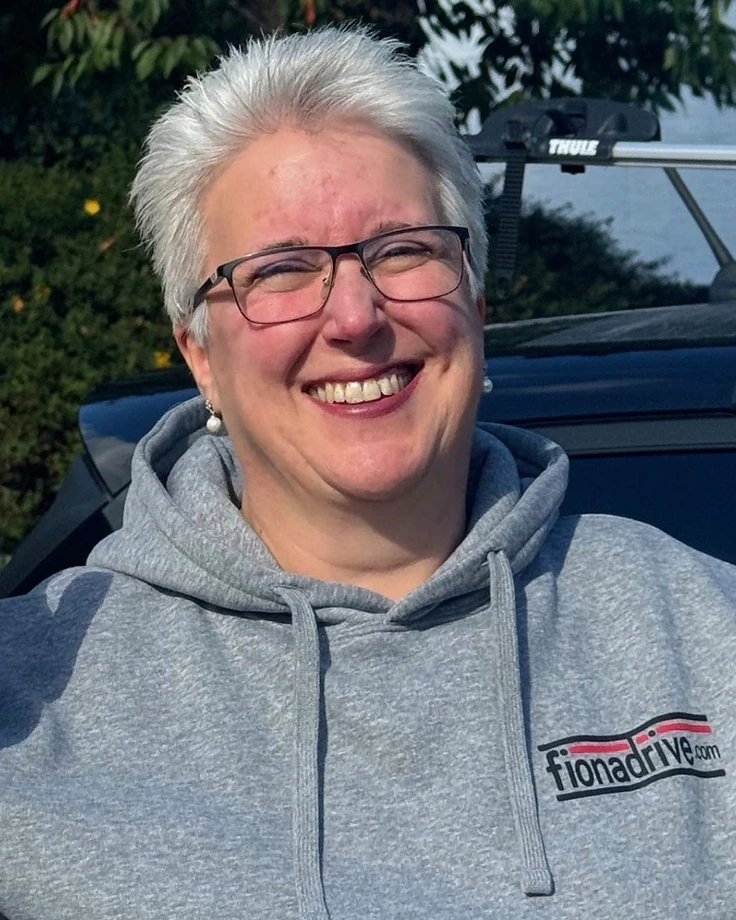
How Fiona got here.
Starting as a Driving Instructor
Fiona began her career in conventional driver instruction, accumulating substantial experience working directly with learners on the road, teaching the skills and knowledge needed to pass the driving test.
Questioning Conventional Instruction
As her experience grew, Fiona became increasingly interested in why simply identifying and correcting driving faults didn't always produce lasting change. She found herself bored and frustrated with conventional instruction, and began looking for something deeper, wanting to understand not just what drivers did wrong, but why.
Discovering Coaching
Completing a BTEC Level 4 in Coaching for Driver Development in 2011 was a turning point. It shifted Fiona's focus from telling and correcting toward genuinely engaging learners in their own development, understanding their thinking, their beliefs, and the factors behind their choices behind the wheel.
A Broader Professional Career
Fiona's work expanded well beyond learner instruction. She began delivering police diversionary courses (Speed Awareness, Motorway Awareness, Safe and Considerate Driving, and What's Driving Us), working with drivers who already knew the rules but still struggled with behaviour on the road. Alongside this, her practice grew to include instructor development, coaching, behaviour change work, Standards Check training, and serving as a BTEC Level 4 Course Presenter.
Developing Her Own Approach
Over time, Fiona's work converged around a consistent set of themes: behaviour, thoughts and feelings, beliefs, communication, coaching, risk, and learner-centred development. Rather than focusing on observable faults alone, she became interested in what sits behind them: the factors that influence why people drive the way they do. This became the foundation of her Evidence-Led Behaviour Change Method™: activity-based learning that replaces instruction with insight.
More than 20 years in driver education and road safety.
But experience alone isn't the point. What matters is that throughout those years, Fiona has kept learning, kept questioning, and kept developing, never settling for "that's how it's always been done."
Grounded in practice.
Specialist in activity-led, in-car behavioural development for driver trainers.
NDORS Registered Coach (NSAC, NMAC, WDU & SCD)
Delivering police diversionary courses: National Speed Awareness Course, National Motorway Awareness Course, What's Driving Us, and Safe and Considerate Driving.
DVSA-Recognised Coaching Qualification for Driver Education
A coaching qualification recognised by the DVSA for driver education.
Standards Check Trainer
Supporting ADIs in preparing for their DVSA Standards Check.
ADI Part 2 & 3 Rescue Coach
Helping trainee instructors through their Part 2 and Part 3 assessments.
DriverMetrics Accredited Coach
Accredited in DriverMetrics psychometric profiling for driver risk assessment and development.
Former BTEC Level 4 Course Presenter
FormerPreviously presented the BTEC Level 4 in Coaching for Driver Development, having completed the qualification in 2011.
What Drives Fiona Today
This section will feature Fiona's own reflections on:
- ·What still excites her about driver and instructor development
- ·What she has learned through her career
- ·Why understanding behaviour matters
- ·What she wants fionadrive to achieve next
Awaiting Fiona's personal contribution
Evidence-Led Behaviour Change Method™
Fiona is interested not simply in what someone does behind the wheel, but in the factors that influence why they do it: their thinking, beliefs, emotions, and the pressures they face in real driving situations.
Explore the approach